Metal Sculpture

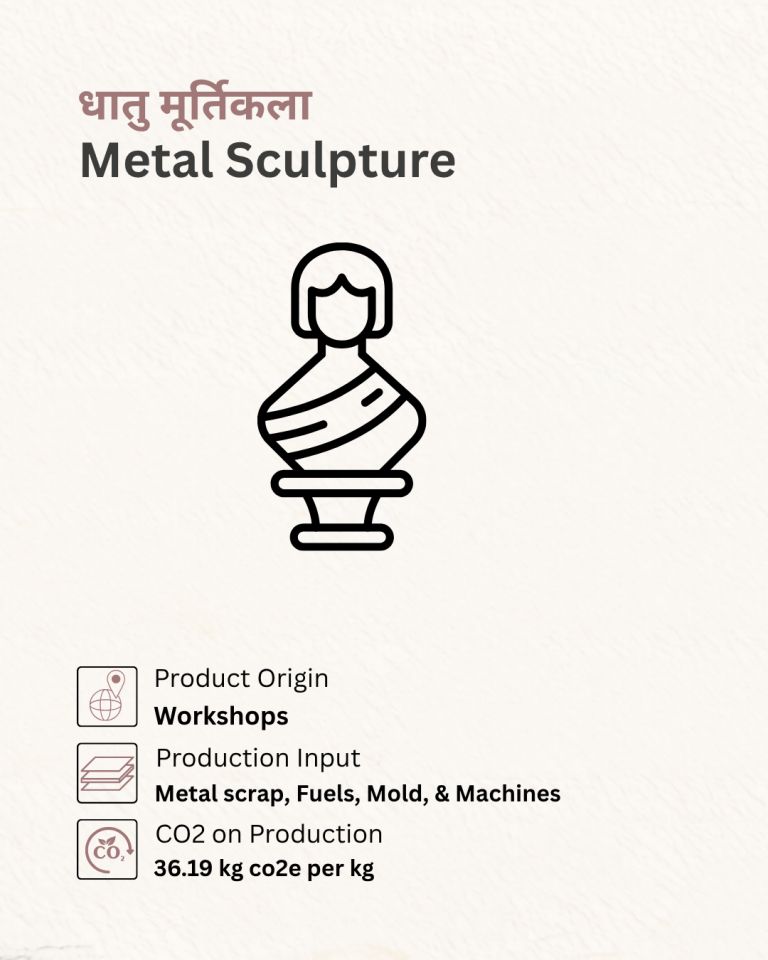
This is the process and release of carbon for 1 kg of metal sculpture in the Nepalese sculpture sector, focusing only on the gate-to-gate stage while ignoring cradle-to-gate and gate-to-grave phases. Transportation to international markets and the primary manufacturing of metal are excluded, even though these stages typically contribute the highest emissions; however, due to the extremely long lifespan of sculptures, their impact can be considered relatively negligible over time.
Inside a modest workshop in Nepal, the transformation begins. Metal scrap, already collected and available, is prepared for melting. The furnace is fired using fuels such as charcoal, wood, or petroleum, releasing a significant share of carbon emissions as solid metal becomes molten—making this one of the most energy-intensive steps.
Alongside this, artisans create a wax model, or “key,” which defines the sculpture’s form. The wax is layered with clay mixed with rice husk, shaped entirely by hand and dried naturally, contributing almost no direct emissions. The mold is then heated, and the wax is melted out using electricity—consuming about 2 kWh and emitting ~0.744 kg CO₂e—leaving a hollow cavity.
Molten metal is poured into the mold and allowed to cool. The sculpture then undergoes welding and finishing, a major emission hotspot contributing around 7.6 kg CO₂e, followed by detailed grinding, carving, and buffing.
Finally, the piece is cleaned using sulfuric acid and prepared for completion. In total, the gate-to-gate emissions amount to approximately 36.19 kg CO₂e per kilogram of sculpture, with melting and finishing dominating the footprint. What remains is a durable cultural artifact, where short-term emissions give rise to generations of artistic value.
All Product